


This article forms part of SACAP’s Anxiety Awareness Series.
High-functioning anxiety is a paradox. People who experience it appear outwardly competent. However, on the inside, they feel high levels of internal distress, driven by behaviours such as fear of failure, overthinking, and self-pressure. Since “functioning” is subjective, it’s also challenging to make an official diagnosis.
Although high-functioning anxiety isn’t in the Diagnostic Statistical Manual of Mental Disorders (DSM), it’s a real condition, and we should take it seriously. While people with this condition may appear to be coping, high-functioning anxiety can be detrimental to one’s physical health, mental wellbeing and interpersonal relationships.
In this post, we will explore this phenomenon, as part of SACAP’s Anxiety Awareness Series, which explores the roots of anxiety, as well as symptoms and strategies to manage it across different life stages.
What is high-functioning anxiety?
To give a simple definition, high-functioning anxiety is the experience of chronic anxiety while still being able to function day to day. To give an idea of what this looks like, an article on Psychology Today shares some of the signs, such as:
- High sensitivity, empathy, and caring about helping/serving others
- Perfectionism and a drive to perform
- Restlessness and feeling “uncomfortable in your own skin”
- Struggling to sleep due to worry
- Engaging in numbing behaviours and self-medicating to relax and “shut down”
To illustrate the difference between high-functioning anxiety and a recognised anxiety disorder, such as General Anxiety Disorder (GAD), people with high-functioning anxiety may experience many of the same symptoms as in GAD, even panic attacks; however, the person can still function and perform daily tasks.
What are some signs of high-functioning anxiety in daily life?
We’ve listed some of the characteristics above, but these may not always be recognisable from the outside. To be able to identify signs of high-functioning anxiety in daily life, it’s important to be aware of common patterns, which include the following:
Overpreparing
To compensate for a fear of failure, people who experience high-functioning anxiety will spend an unnecessary amount of time preparing and planning.
People-pleasing
To cope with a fear of disappointing others, people with high-functioning anxiety will people-please and prioritise others’ needs over their own.
Difficulty relaxing
As we mentioned above, people with high-functioning anxiety can feel restless and struggle to relax and switch off.
Productivity masking distress
One of the key characteristics of high-functioning anxiety is a drive to achieve and perform, but this high level of productivity masks internal distress.
Emotional and physical signs of high-functioning anxiety
Many of the above symptoms overlap with other physical and emotional manifestations of anxiety. However, it’s important to note that, besides behavioural signs, high-functioning anxiety can indeed manifest physically.
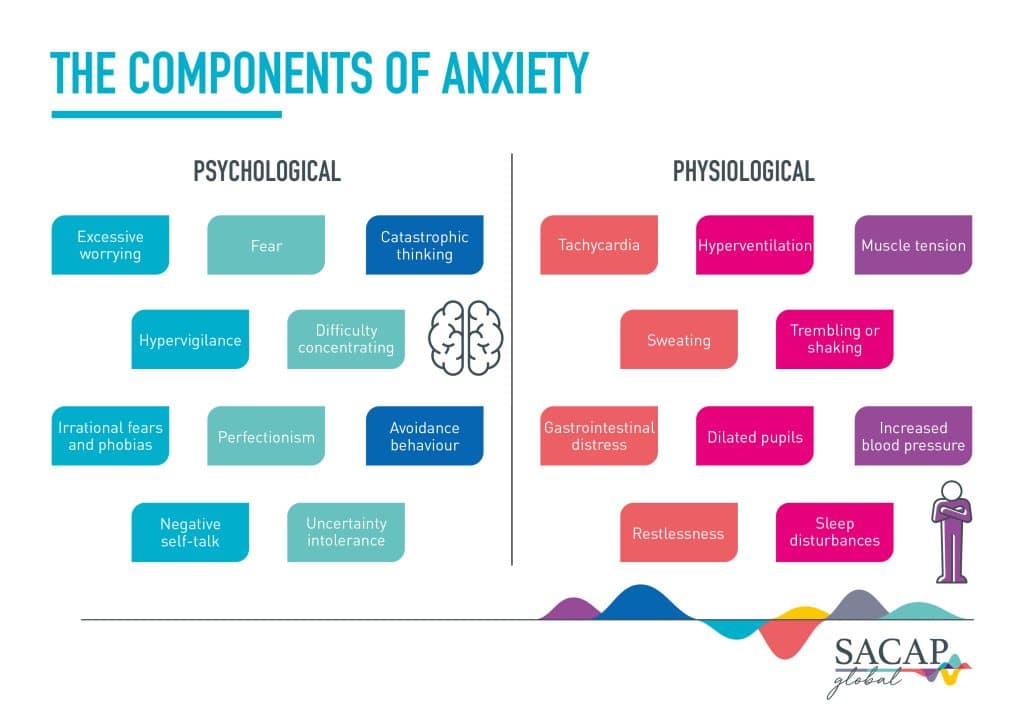
We have covered some of the general behavioural signs of high-functioning anxiety, but according to the Mayo Clinic, other symptoms include the following:
- Tension, such as jaw clenching
- Digestive issues
- Headaches and migraines
- Racing heart rate
- Sleep disturbances
Why do we often miss symptoms of high-functioning anxiety?
We live in a performative society that encourages busyness, “always on” behaviour, and rushing from one place to the next. Plus, a certain level of anxiety is normal. It motivates us and sustains our progress. How do you know, however, when normal anxiety is turning into something more severe?
In societies and in workplaces that value grit and a good work ethic, it’s easier to mask high-functioning anxiety. One reason is that individuals who exhibit this phenomenon receive praise for their punctuality, competence, and perfectionism. High performers may also minimise their internal distress to avoid being perceived as dramatic or weak, making them unlikely to speak out or seek support.
High-functioning anxiety, stress and burnout
In the short term, high-functioning anxiety may present as productive and organised, but long-term overfunctioning can lead to emotional exhaustion and burnout. Spending years overcommitting and experiencing hypervigilance and chronic self-pressure can take its toll. It can also lead to other long-term mental health challenges, such as depression.
Therefore, the danger of high-functioning anxiety is that behind an organised façade lies fear, worry and panic, which creates distress and unhappiness, which are detrimental to physical and mental health, as well as interpersonal relationships. As a result, like a more widely recognised anxiety disorder such as GAD, high-functioning anxiety does ultimately impair function, it’s just subtler about it.
Coping with high-functioning anxiety
As we’ve established, high-functioning anxiety can be detrimental to one’s physical health, mental wellbeing and interpersonal relationships. Living with this type of anxiety is often not sustainable, and, at some point, the crash may come.
Thankfully, there are various forms of therapy and even medications that can assist those living with high-functioning anxiety to lead a more balanced life. If you’re exhausted and pushing yourself to the edge while taking on more and more, it might be time to contact a counsellor or professional who can help you ease the load.
In addition to general tools for coping with anxiety, some specific strategies include the following:
Learning to set limits
Being ambitious and wanting to achieve your goals is fine. However, stretching yourself beyond your limits is not. Learning to set realistic goals can help.
Reducing perfectionism
A good work ethic is something to strive for, but “perfect” is not attainable. A job well done doesn’t need to come at the expense of your wellbeing. Setting clear expectations on what you need to deliver and negotiating realistic deadlines can help.
Noticing harsh self-talk
Self-compassion and kindness are essential for managing harsh self-talk. Talking to a qualified mental health practitioner or counsellor can help to identify and manage this tendency.
Building recovery time into schedules
As the saying goes, “rest, don’t quit.” No one can work or perform at 100% twenty-four hours a day. By incorporating recovery time into your schedule, you can ensure that you prioritise your wellbeing while achieving your goals.
Seeking support earlier
It’s essential to seek help, preferably from a qualified mental health practitioner, when you feel like you are not coping, and not only reach out when “functioning collapses”.
Learn more about psychological wellbeing and mental health at SACAP
If you’re interested in learning more about psychological wellbeing and mental health, SACAP offers a variety of anxiety and stress-related microcredentials. These include the following:
- Managing & Preventing Anxiety
- Stress Management & Resilience
- Understanding Burnout Through the Lens of Compassion
- Holistic Approach to Managing Depression
We also offer accredited degree programmes in applied psychology and counselling, which provide more in-depth knowledge and training in how to manage anxiety and other related mental health challenges in a professional capacity:
FAQ:
1. What is high-functioning anxiety?
High-functioning anxiety is the experience of chronic anxiety, while still appearing to function optimally. High-functioning anxiety shows outward competence but conceals inner distress.
2. Is high-functioning anxiety a real condition?
Yes. Although it is not listed as a disorder, as functioning is not fully impaired, it is a very real condition and can have disastrous consequences for long-term physical and mental health if not addressed.
3. How is it different from general anxiety?
High-functioning anxiety is different from general anxiety in that anxiety disorders like GAD include significant disruptions to daily functioning, while people with high-functioning anxiety can still cope with daily life and responsibilities.
Related Courses


Bachelor of Applied Social Science (Majoring in Psychology and Counselling)

Applied Psychology

3 years, full-time | 5 years, part-time


Bachelor of Psychology
Applied Psychology
4 years, full-time

Bachelor of Social Science Honours in Psychology
Applied Psychology
1 year full-time, 4 academic terms (online)